The short answer
For a straightforward restripe of an existing layout in the Phoenix metro in 2026, expect roughly $8 to $16 per stall when the lot already has visible lines to follow. A small strip-center lot of 40 stalls typically lands between $475 and $850. An 80-stall center runs $850 to $1,600. A 200-stall retail lot generally runs $1,800 to $3,400.
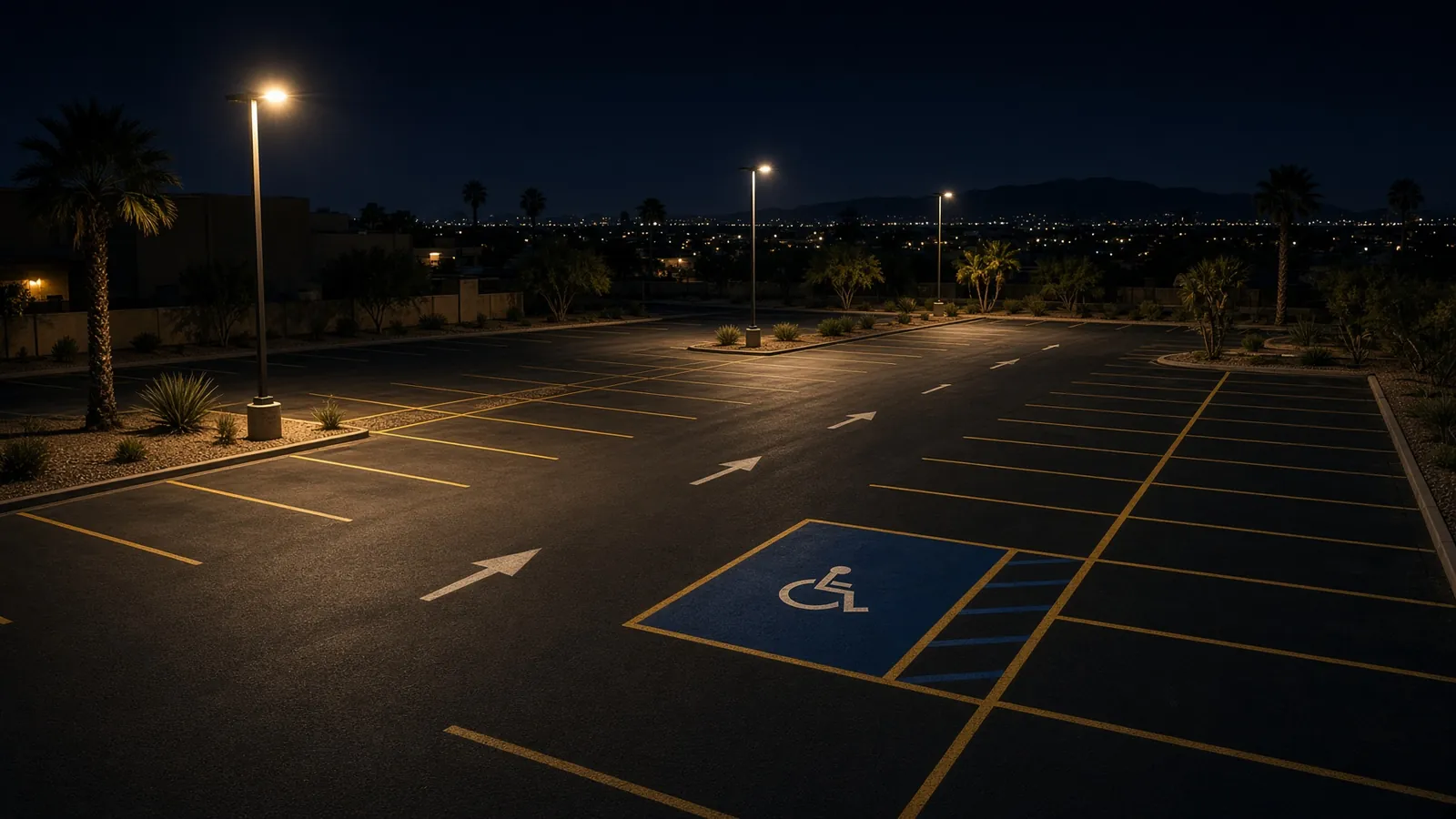
Those ranges assume a restripe in water-based traffic paint, two coats, applied at night — the spec that actually lasts under Valley UV. New layout work — measuring and marking a lot that has no lines left, or redesigning it entirely — runs $18 to $32 per stall, because the labor is in the layout, not the paint.
Phoenix metro 2026 rate card
These are typical installed ranges for commercial lots in Phoenix, Mesa, Chandler, Gilbert, Tempe, Glendale and Scottsdale. Night work and a two-coat UV-resistant spec are included — they are the standard here, not an upgrade. A public rate card is not a bid; surface condition, access and ADA corrections still move the number.
| Item | Unit | Typical range |
|---|---|---|
| 4″ water-based lines, two-coat UV spec | linear ft | $0.32 – $0.52 |
| Standard stall restripe (visible layout) | per stall | $8 – $16 |
| New layout / no visible lines | per stall | $18 – $32 |
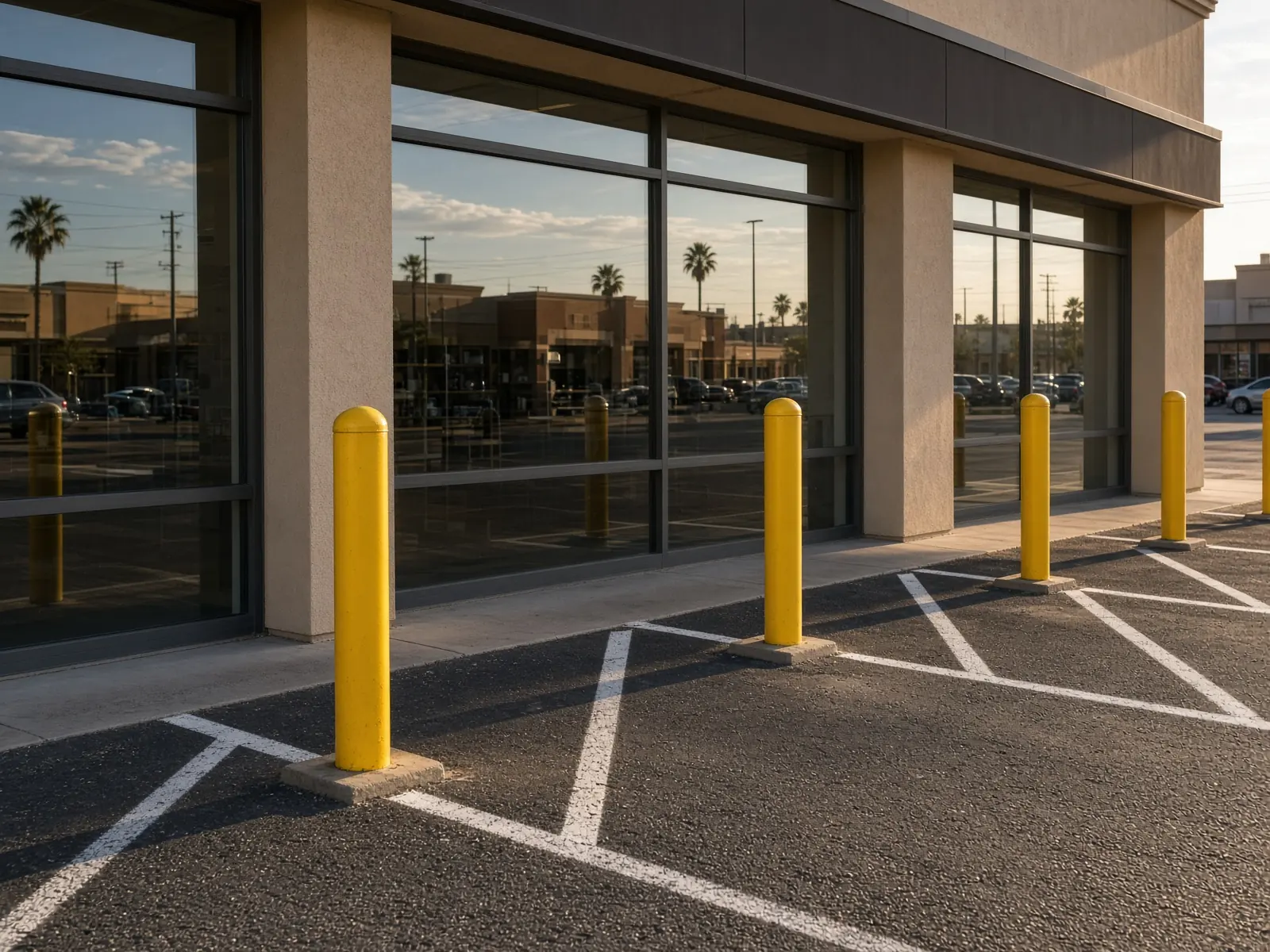
| ADA car stall (stall + aisle + symbol) | each | $65 – $110 |
| ADA van stall (complete) | each | $85 – $140 |
| Directional arrows | each | $22 – $40 |
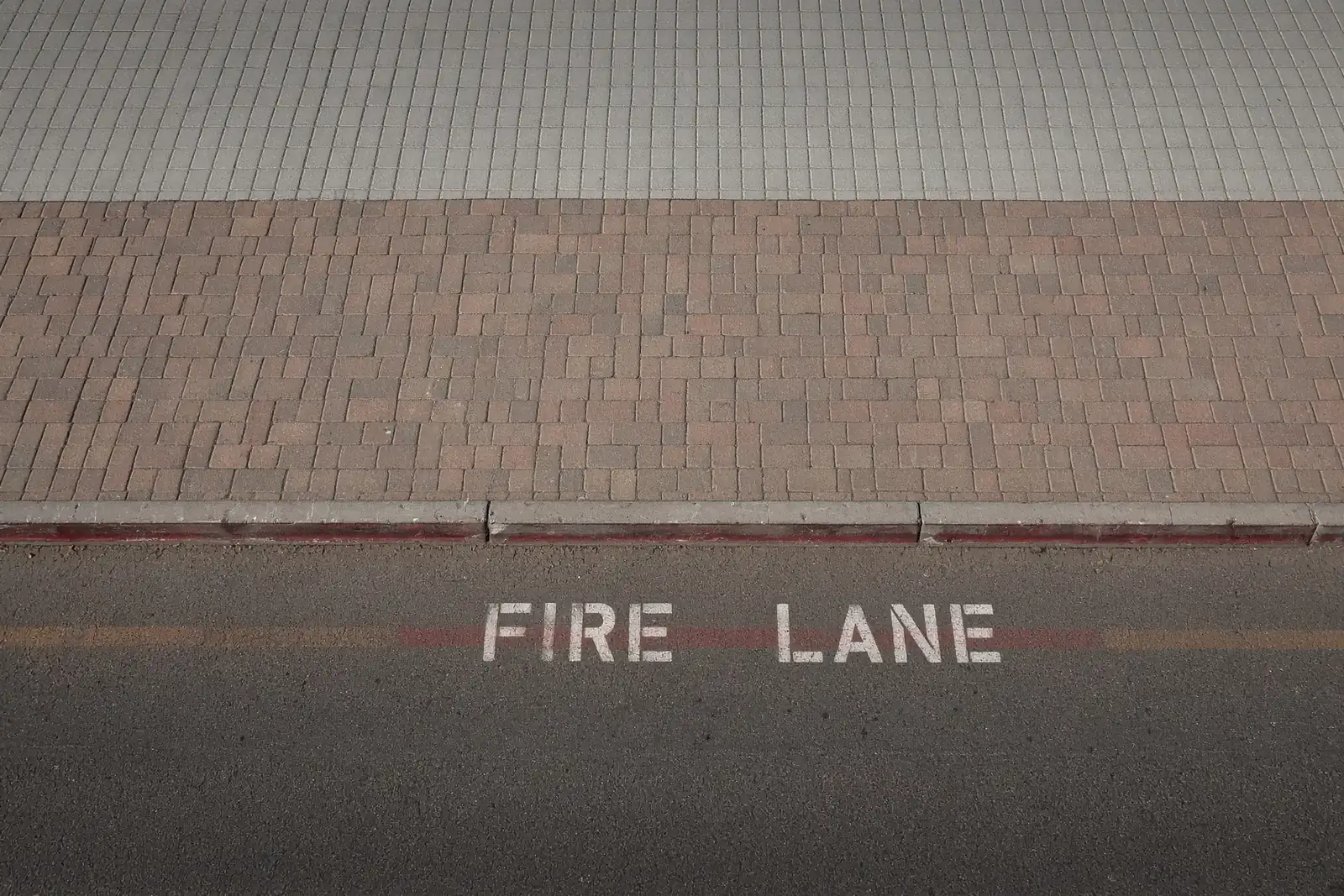
| Stencils (FIRE LANE, STOP, numbering) | each | $28 – $50 |
| Fire-lane red curb + lettering | linear ft | $1.40 – $2.75 |
| Crosswalk | each | $95 – $220 |
| Thermoplastic (arrows, stop bars, crossings) | linear ft | $0.90 – $1.85 |
| Wheel stops, installed | each | $55 – $95 |
| Mobilization / job minimum | per visit | $425 – $575 |
| 40-stall strip center, restripe | job | $475 – $850 |
| 80-stall center, restripe | job | $850 – $1,600 |
| 200-stall retail, restripe | job | $1,800 – $3,400 |
Why per-stall pricing beats per-square-foot
Some contractors quote by the square foot. It is a poor unit for striping and it usually favors the contractor, because a lot's total area has almost no relationship to how much line gets painted. Two lots of identical size can differ by 40% in linear footage depending on stall angle and drive-aisle layout.
Ask for a quote broken into stalls, linear feet of specialty marking, and unit items. If a contractor cannot break it down that way, they have not measured your lot.
The five things that move the price
Once you know the stall count, these are what actually change the number:
- Layout vs. restripe — no existing lines means measuring and chalking the whole lot before any paint is sprayed. This is the single biggest cost driver.
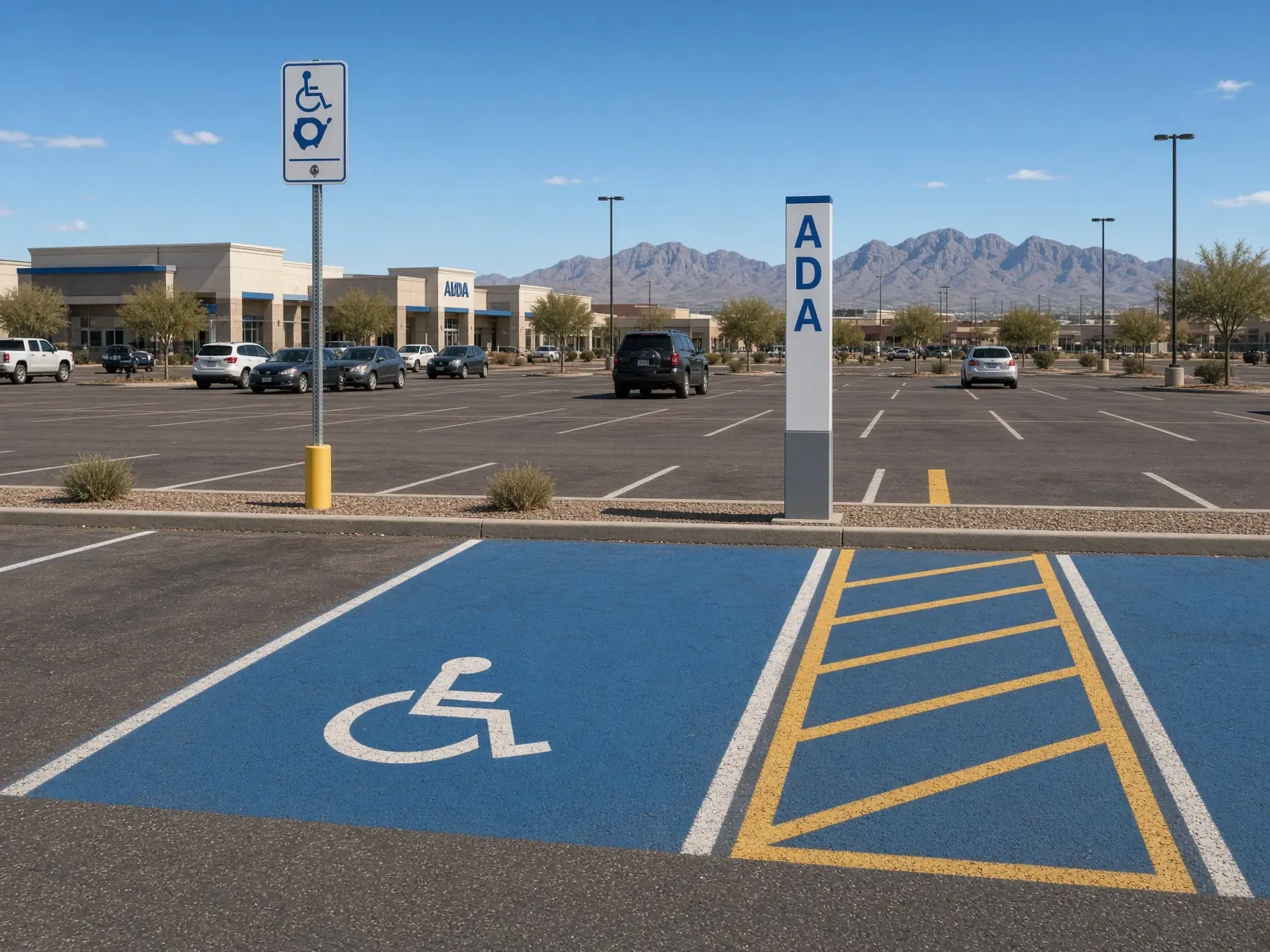
- ADA work — accessible stalls, access aisles, the symbol stencil and the hatched no-parking area cost several times a standard stall. Signage is usually a separate line item.
- Specialty marking — fire lanes, crosswalks, arrows, numbering, loading zones and curb painting are priced by the linear foot or per unit, not folded into the stall rate.
- Surface condition — oxidized or unsealed asphalt takes more paint to cover and holds it worse. A good contractor will tell you if sealcoating should come first.
- Access and timing — night work, phased sections to keep a business open, and weekend scheduling all carry a premium. It is usually worth it; a closed lot costs more than the surcharge.
What a fair quote should contain
A quote you can actually evaluate names the paint product and whether it is a single or double coat, gives the stall count it is based on, lists ADA and specialty items separately, states the schedule, and says what happens if the lot is not clean or clear on the day.
A single number on a text message is not a quote. It is a guess, and the difference tends to appear as a change order later.
One Arizona-specific cost most quotes ignore
Cheap paint fails faster here than almost anywhere in the country. Surface temperatures above 150°F in summer and year-round UV mean a single thin coat of low-grade traffic paint can look chalky within a single season, while a properly specified water-based traffic paint holds two to three years. See the best paint for parking lot lines in Arizona heat.
Run the math over the life of the paint, not the invoice. A quote that is 25% cheaper but needs redoing in a third of the time is not cheaper.
Phoenix 2026 cost estimator
Ballpark only — based on current Valley rates for two-coat water-based paint, night work included. A walkthrough still beats a slider.
Estimated range
$1,144 – $2,180
Includes typical mobilization. Surface repairs, sealcoat and signage are separate.
Common questions
Is there a minimum charge?
Most contractors, including us, have a minimum that covers mobilization — getting equipment and crew to the site. In the Phoenix metro this is typically $425 to $575. It is why a 10-stall lot does not cost a quarter of a 40-stall lot.
Does the lot need to be empty?
Only the section being painted. Most commercial jobs run overnight or in phases so the business never closes. We plan the sequence with you before the day.
Do you charge extra for ADA stalls?
Yes, and any honest contractor will. An accessible stall involves the stall lines, a striped access aisle, the symbol stencil and often the hatching — several times the work of a standard stall. Budget $65 to $110 for a car stall and $85 to $140 for a van stall, plus signage. Full dimensions are in the [ADA parking requirements guide](/ada-parking-requirements-arizona).
Can you match my existing layout exactly?
Usually, if the old lines are still visible. If they are not, the lot has to be measured and laid out from scratch, which is priced differently. Send a photo and we can usually tell you which situation you are in.