Standard stall dimensions
Typical commercial stalls run 9 feet wide by 18 feet deep for 90-degree parking, though 8.5 by 18 is common in high-density retail and some cities permit narrower compact stalls as a percentage of the total. Angled parking at 60 degrees needs less drive-aisle width but yields fewer stalls per row.
Drive aisles are where layouts most often go wrong. Two-way traffic with 90-degree stalls generally needs 24 feet of aisle; one-way with angled stalls can work at 12 to 18 feet depending on the angle. Squeezing the aisle to add a row of stalls is the most common way a redesign fails inspection or, worse, passes and then causes damage.
What the colors mean
Paint color carries meaning, and using the wrong one creates liability rather than just looking odd:
- White — standard stall lines and most general markings. The default for commercial lots.
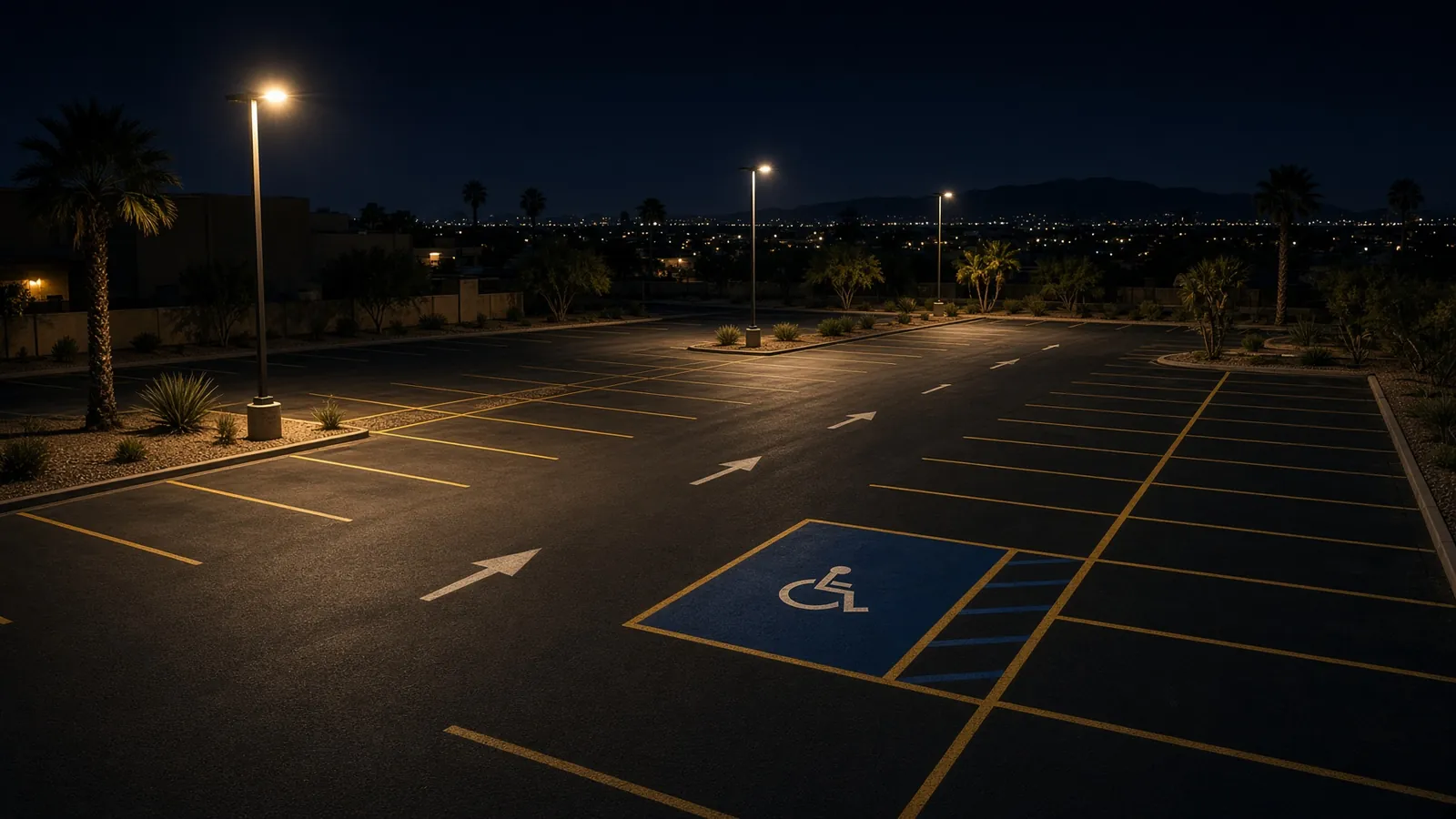
- Yellow — separation, caution, and often reserved or loading areas. Also standard for curb painting indicating no parking in many jurisdictions.
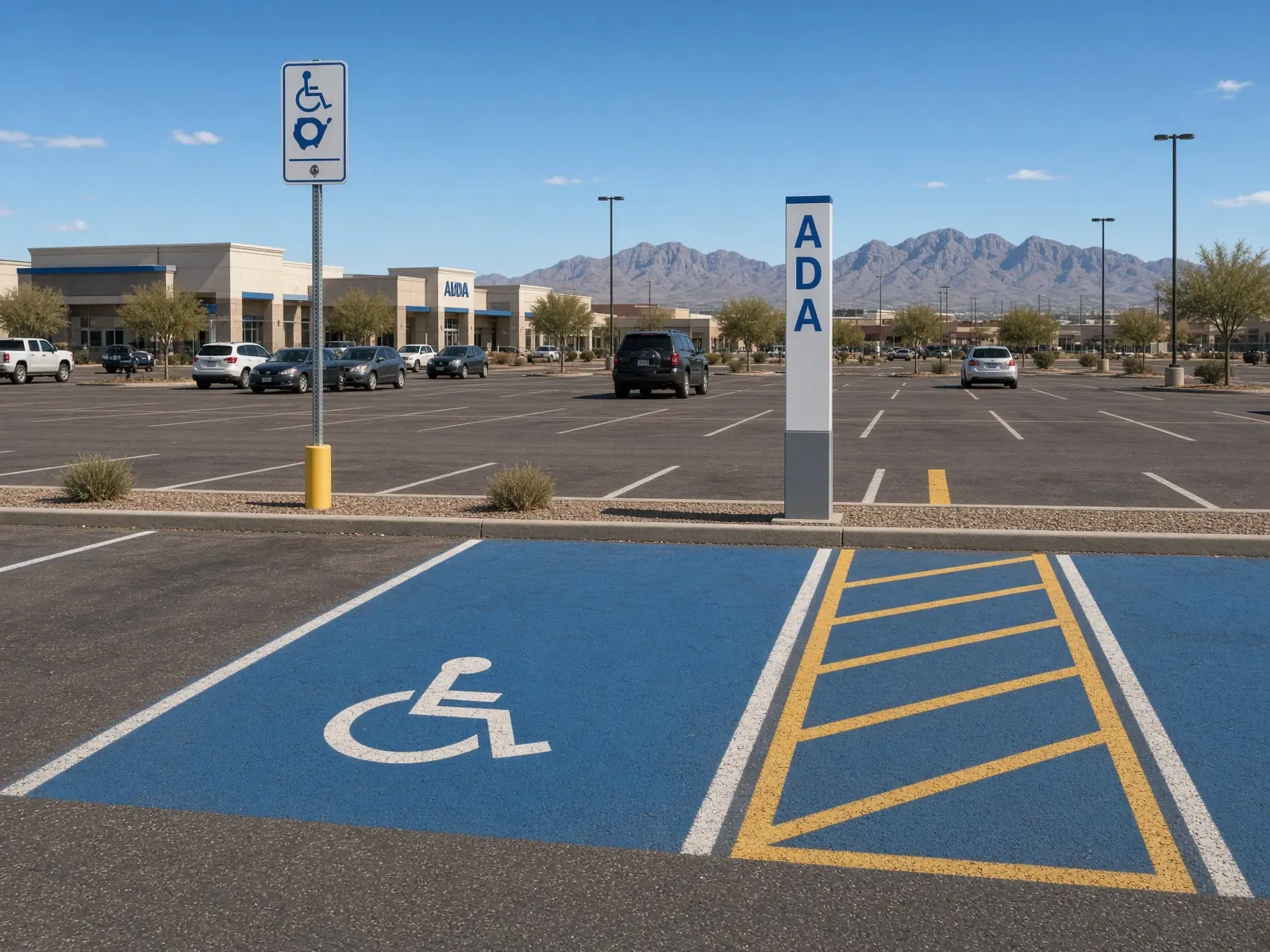
- Blue — accessible parking only. Blue is reserved for ADA stalls and their access aisles. Never use it decoratively.
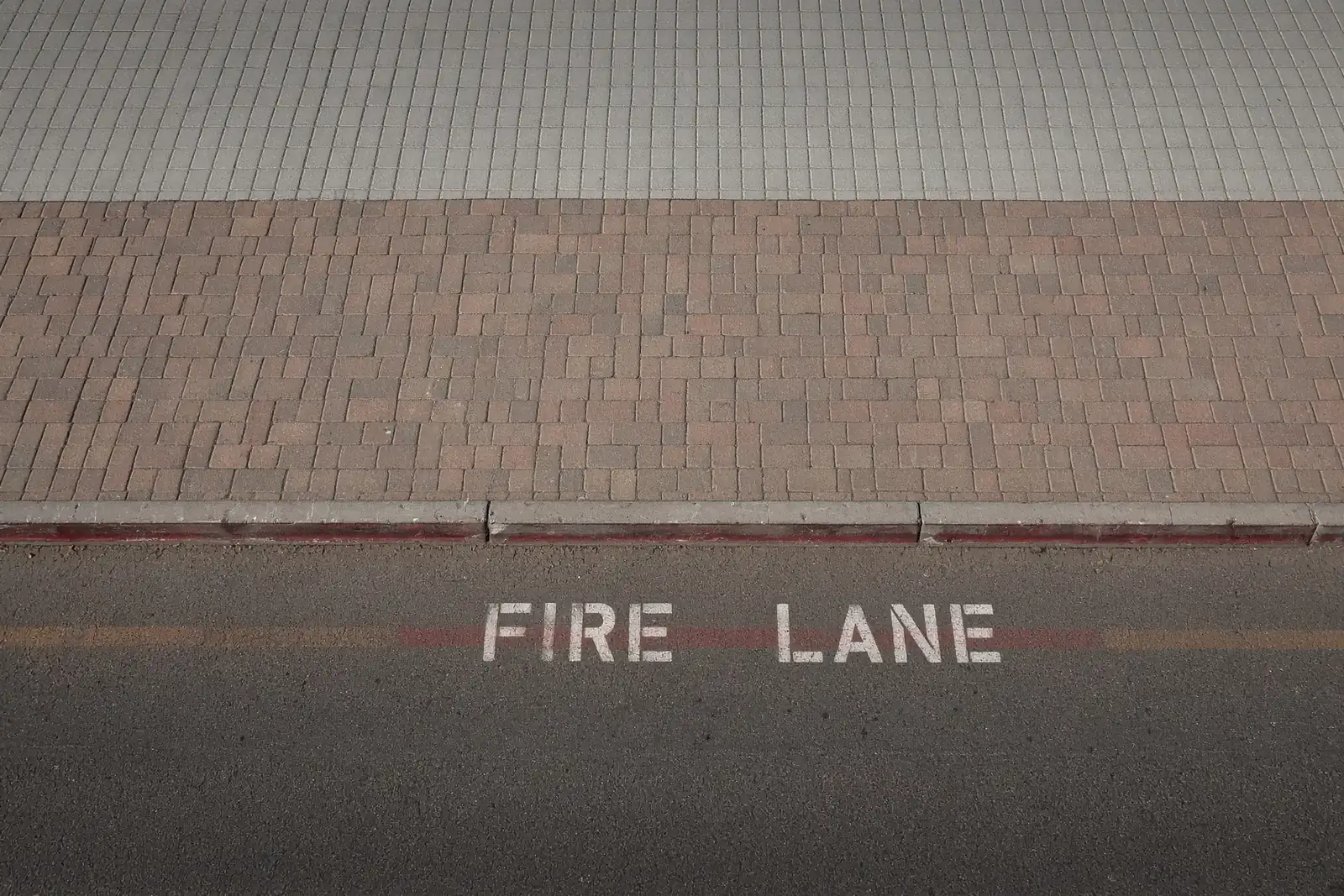
- Red — fire lanes and no-parking zones enforced by the fire marshal. Red curb typically requires accompanying lettering.
- Green — time-limited parking in some cities. Verify locally before using it.
Access aisles are part of the standard
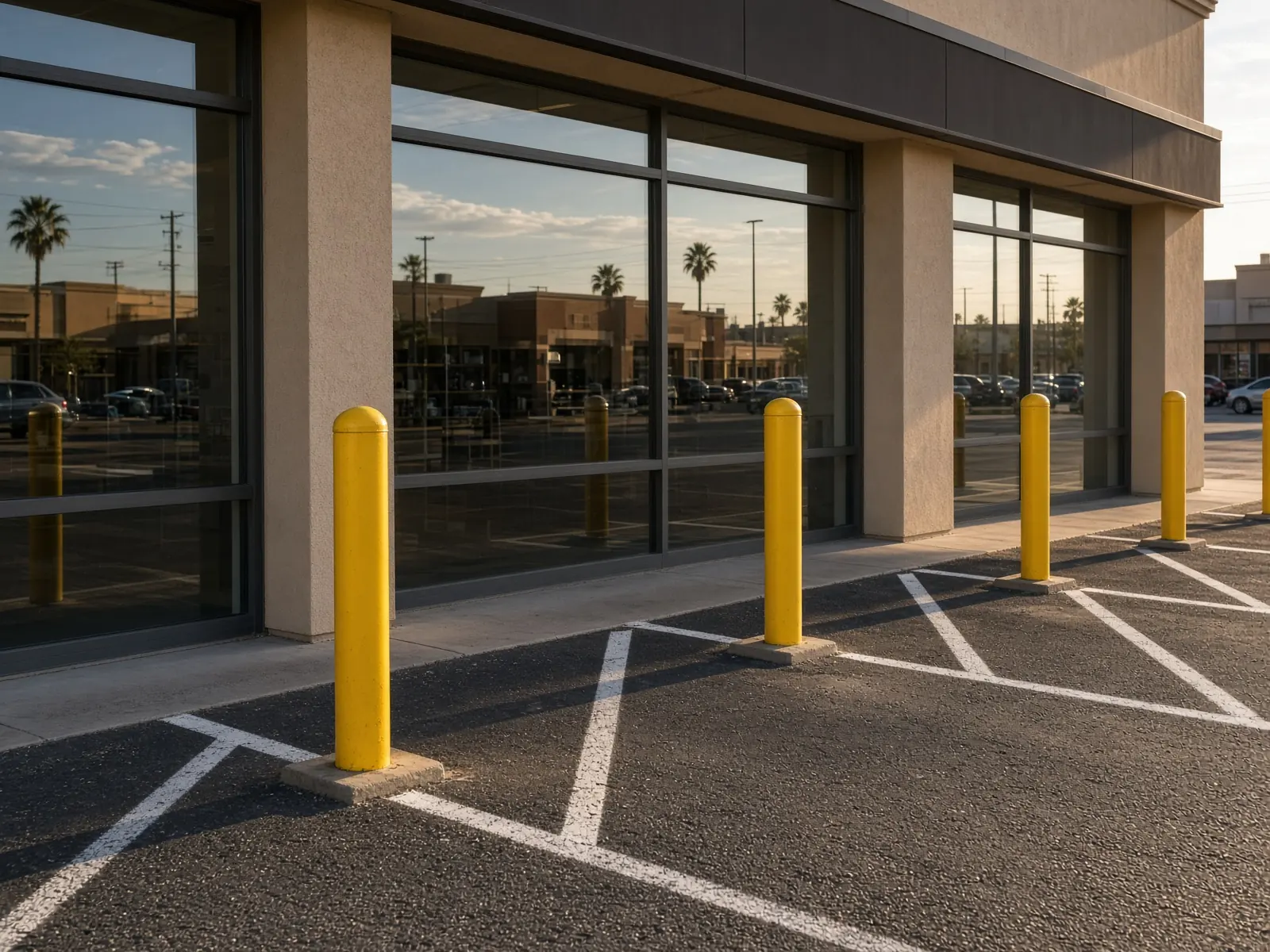
The striped area next to an accessible stall is not a decorative buffer. It is a required element with its own dimensions, it must be marked so it reads as no-parking, and it has to connect to an accessible route to the building entrance. Full dimensions live in our ADA parking requirements guide.
The most common failure we find is an access aisle that exists but is too narrow, usually because the lot was laid out under an older requirement and simply repainted the same way every cycle since.
Fire lanes
Fire lane marking is set by your local fire code and enforced by the fire marshal, not by a national standard. Requirements for stripe width, lettering size, lettering interval and curb treatment vary between Phoenix, Mesa, Chandler and Scottsdale.
This is the requirement most likely to have changed since your lot was last painted, and the one most likely to generate a correction notice. Confirm the current requirement with your city before repainting rather than reproducing what is already on the ground.
What to check on your own lot
You can do a rough self-assessment in fifteen minutes with a tape measure:
- Count total stalls, then count accessible stalls, and compare against the ADA requirement table.
- Measure one access aisle at its narrowest point.
- Check that at least one in six accessible stalls is van accessible.
- Confirm every accessible stall has a vertical sign, visible when a vehicle is parked there.
- Look for faded fire lane lettering and check the interval between repeats.
Common questions
Is there a federal parking lot striping code?
Not a single one. The ADA Standards govern accessible parking nationally. Everything else — stall size, aisle width, fire lane marking — comes from your city's zoning and fire codes, which is why requirements differ across the Phoenix metro.
Can I paint over old lines in a different layout?
You can, but ghost lines from the previous layout stay visible for years and cause confusion. For a layout change, the old lines should be blacked out or the surface sealcoated first.
How wide should stall lines be?
Four inches is the common commercial standard. Some specifications call for double lines between stalls, which uses more paint but wears better and reads more clearly in high-turnover lots.