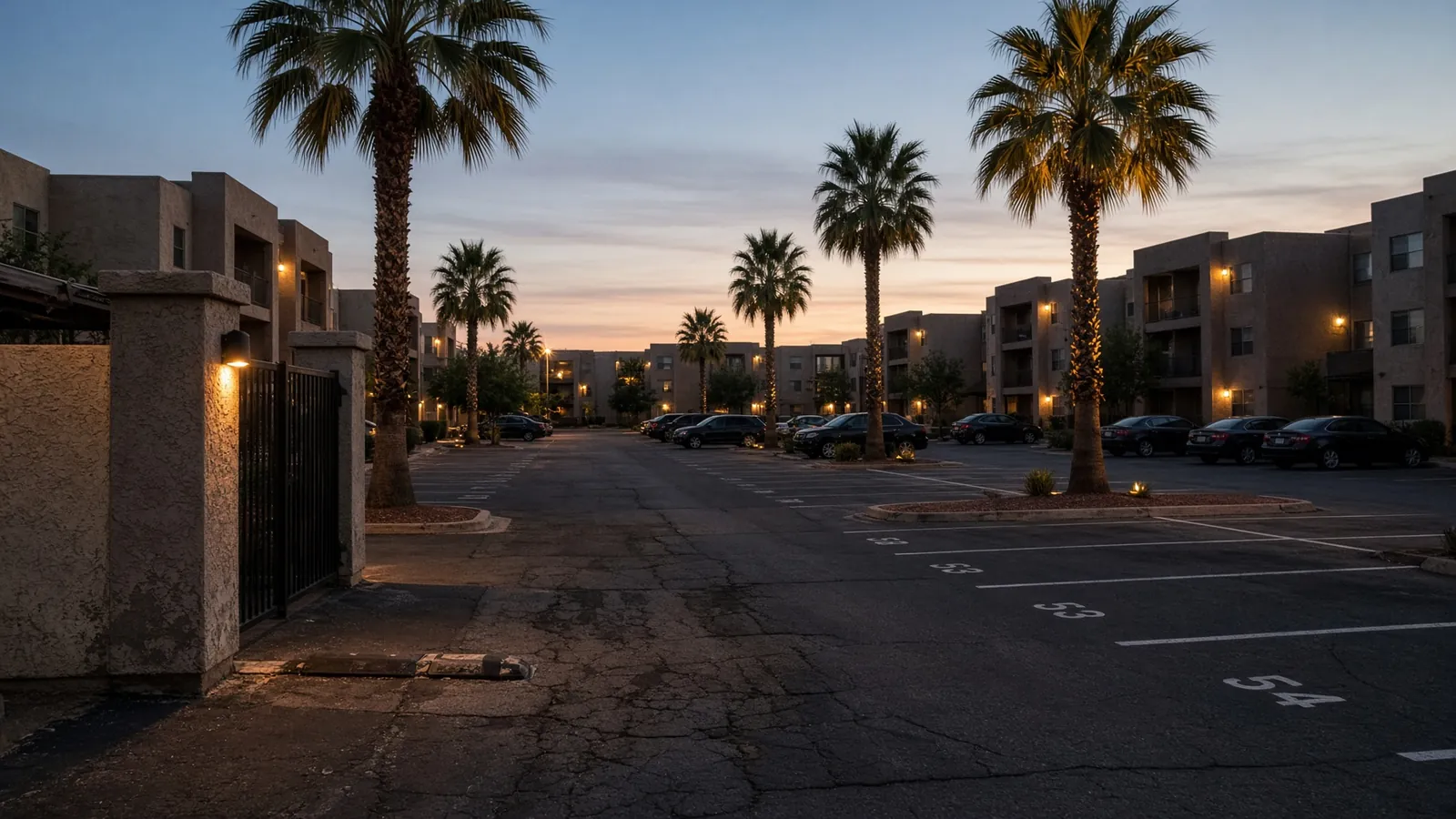
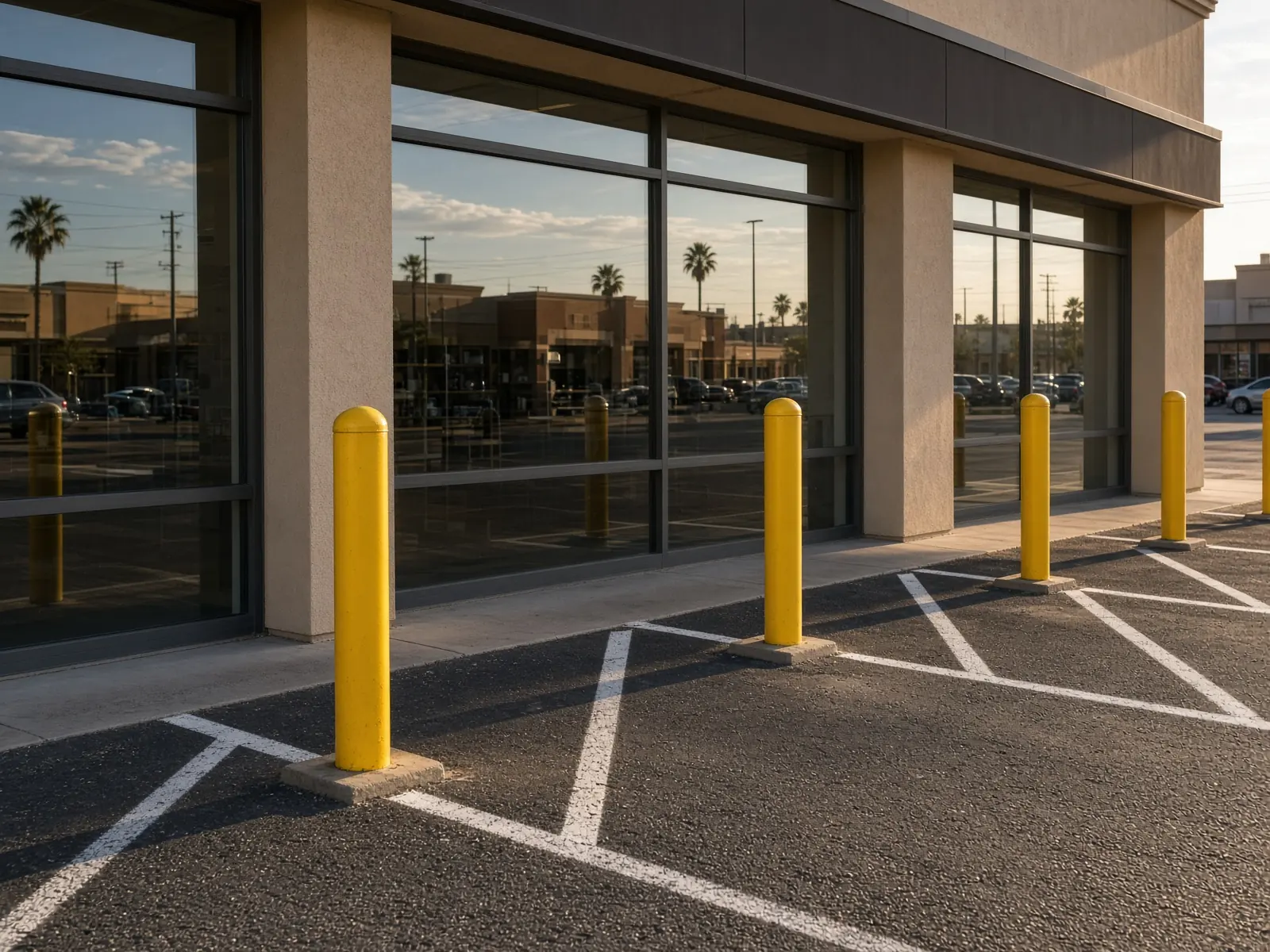
The color code on a commercial lot
MUTCD Part 3 tells you what pavement-marking colors mean on a roadway: white separates same-direction traffic and marks stalls, stop bars and crosswalks; yellow separates opposing traffic; blue supplements the accessible symbol. It does not write your fire-lane spec and it does not invent a statewide curb language. Those come from the ADA Standards, your city’s fire-code amendments, and — only in Phoenix — a short list in City Code 36-27.
If your lot currently has yellow stall lines, red stall lines, or blue used as an accent around a monument sign, that is a layout we will talk you out of. Color that does not match the rule confuses drivers and gives an inspector an easy note.
The color code on a commercial lot
- White
Standard stalls, arrows, stop bars
Default commercial language. 4-inch lines.
- Yellow
Separation, hatch, loading zones
Not a fire lane. Often the access-aisle hatch.
- Blue
Accessible stalls only
Color does not create the stall.
- Red
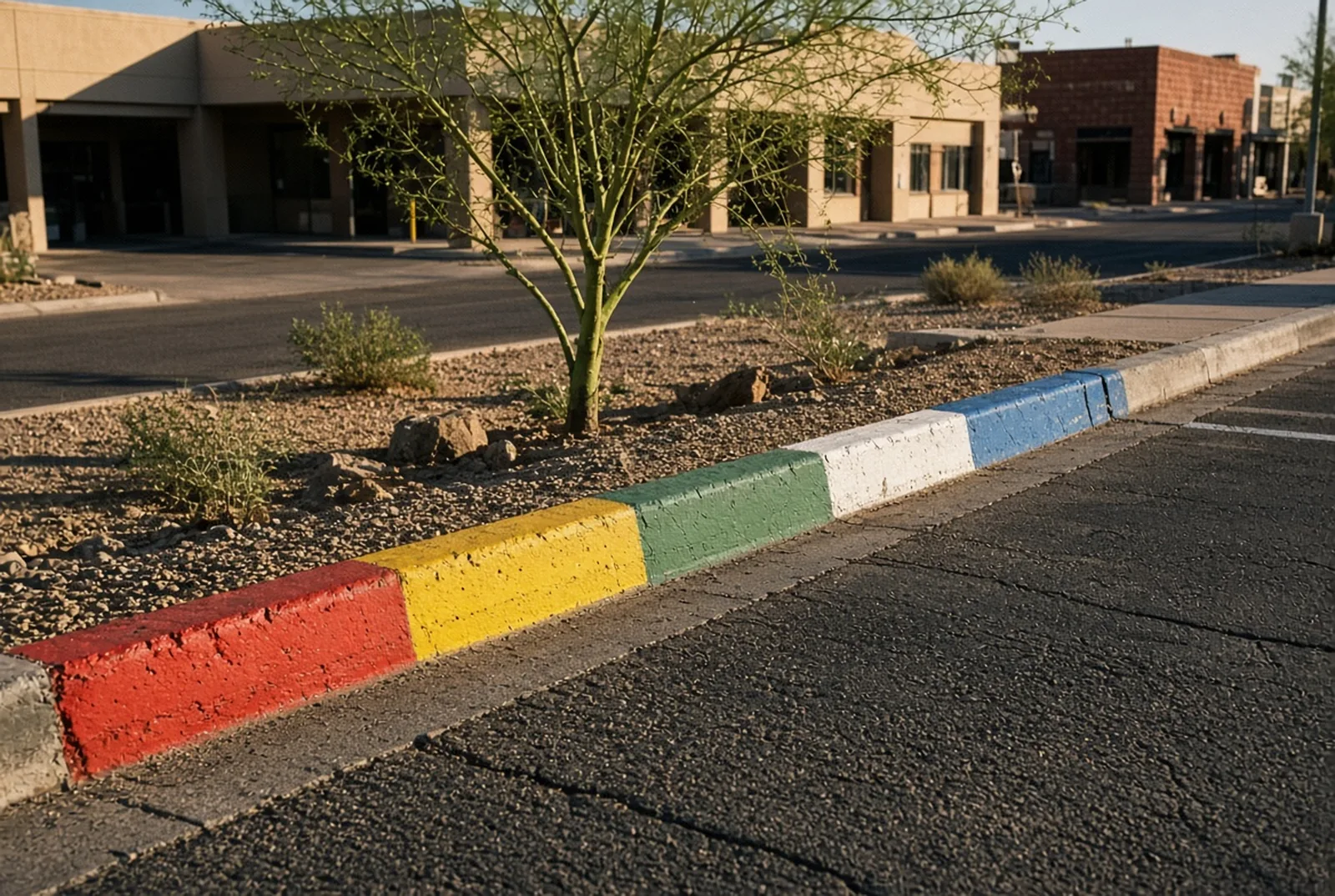
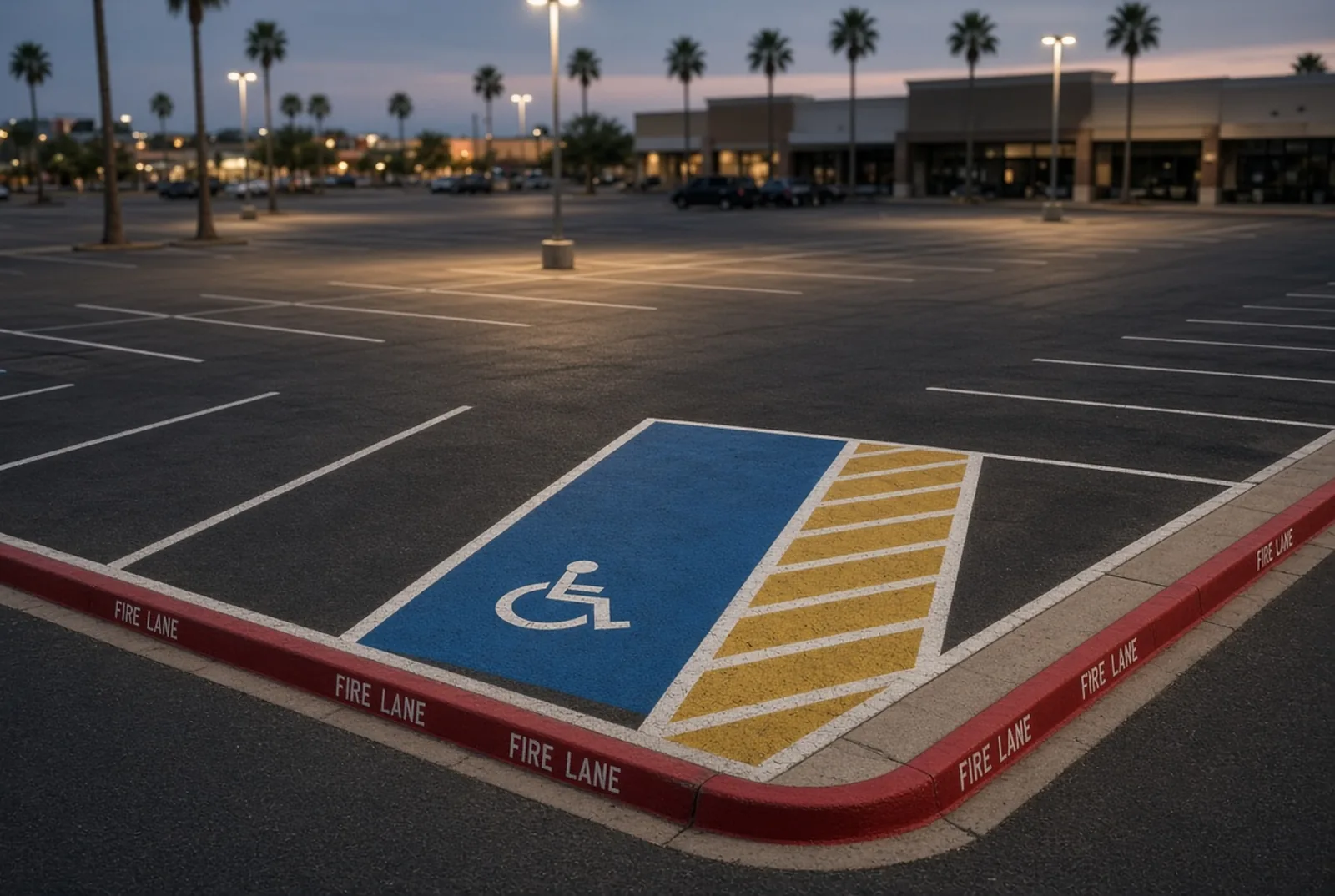
Fire lane curb and lettering
City fire-code spec, not MUTCD.
Fire lanes — this is where cities actually diverge
Fire-lane marking is the requirement most likely to have changed since the lot was last painted, and the one most likely to generate a correction notice. Do not copy the old stencil and call it done.
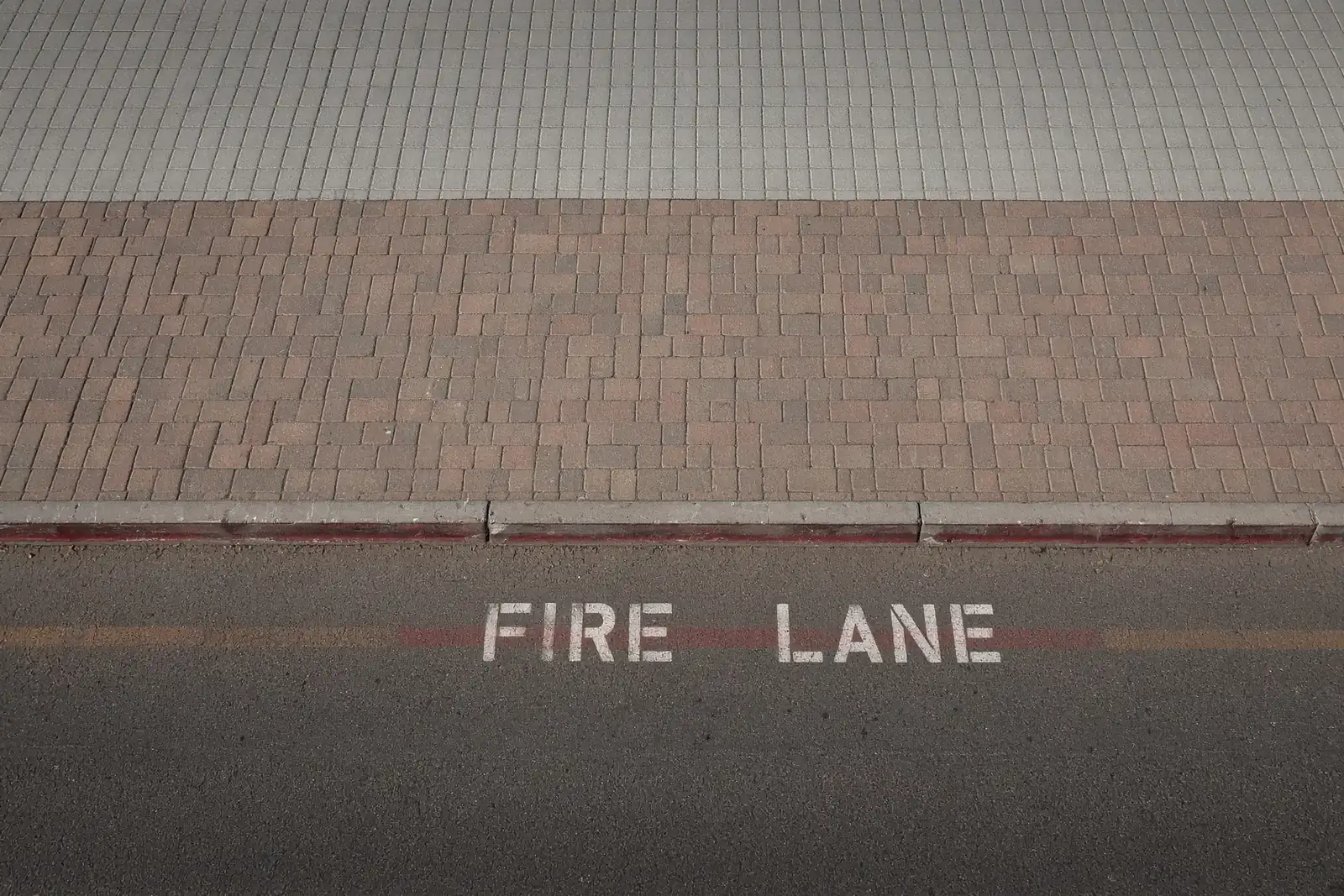
- Phoenix (2024 IFC with city amendments § 503.3): red on the top and face of the curb for the full length of the lane. Where there is no curb, or a rolled curb, a 6-inch red stripe. Stencil “FIRE LANE - NO PARKING,” white on red, 3 inches high with a ½-inch brush stroke. Signs on an approved pole set in at least 18 inches of concrete, bottom of the sign 7 feet above grade, facing oncoming traffic, 12–18 inches back from the curb. A sign within 15 feet of each end. Roads wider than 36 feet are exempt from signs and painted curbs on either side.
- Scottsdale (IFC amendment): red paint on the curb, street or driveway, labeled “FIRE LANE NO PARKING” in white block letters 3 inches high with a ¾-inch stroke on the vertical face. Lettering no more than 50 feet apart, and at the beginning and end of the lane. Police or fire can cite a vehicle in the lane.
- Tempe, Glendale, Chandler and Gilbert treat fire lanes as a designated no-parking control and expect red marking plus signs. Gilbert § 62-67 makes it unlawful to park on any fire lane the traffic engineer has designated, public or private. Chandler points private streets to Fire Department details FD-111 and FD-112. Glendale has a dedicated fire-lane section at § 24-58. We confirm the current local amendment before the first can of red is opened.
Blue is not optional, and it is not just paint
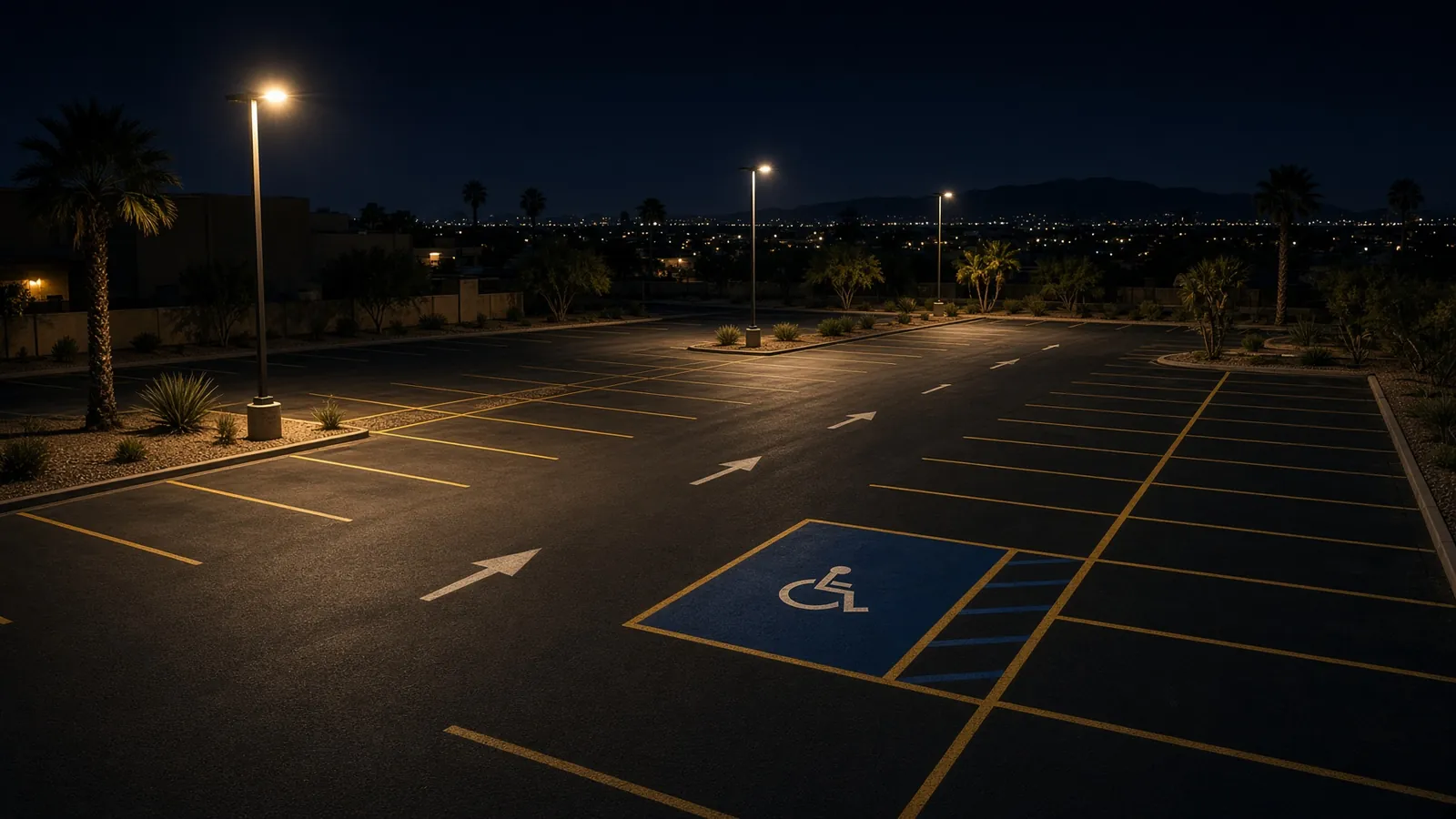
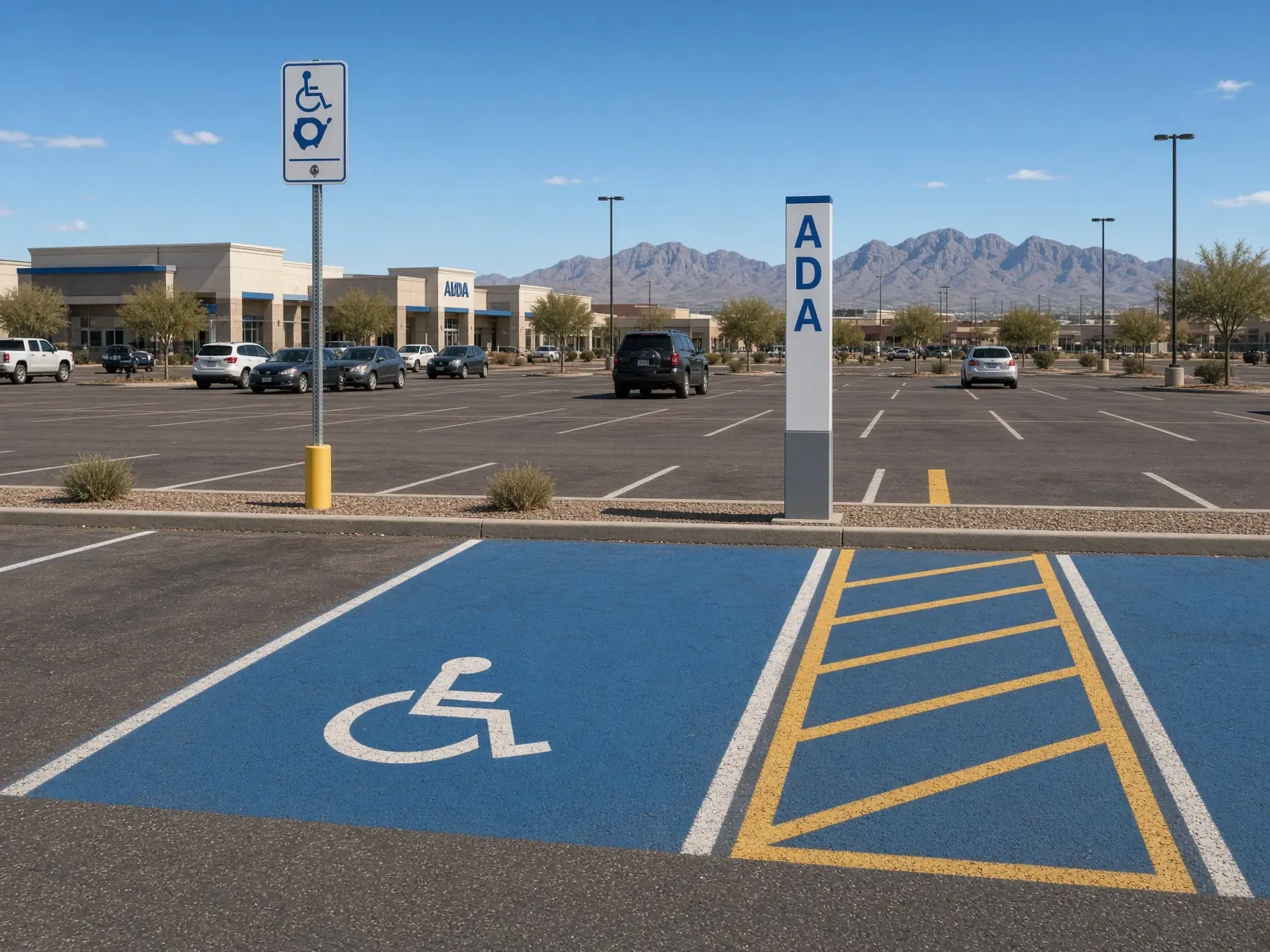
Accessible stalls are a federal standard with local enforcement. Blue paint marks the stall. It does not create the stall.
A compliant accessible stall needs the stall width, a marked access aisle, the international symbol, a vertical sign visible when a vehicle is parked there, and an accessible route to the entrance. The aisle is a no-parking area. Tempe’s code prefers that hatch in a contrasting color, “preferably yellow.” Full dimensions live in the ADA parking requirements guide; the cost of doing it as a line item lives in the price guide.
The failure we see most often is an aisle that was legal when the center was built and is too narrow now, faithfully repainted every cycle. Color will not fix that. Layout will. See parking lot striping standards.
Loading zones on private property
On the street, Phoenix yellow is freight-only during posted hours — that rule is unpacked in what curb colors mean. On a private lot you still need the color to match the rule you want drivers to follow: yellow hatch and a sign for a loading zone, not a row of yellow stall lines that look like reserved parking.
If you want a passenger-only drop-off, say so on a sign. Do not rely on a white curb to carry that meaning. Phoenix never defined it, and a delivery driver who learned to drive in another state will read white however that state taught them.
What to check before you restripe
Walk the lot once before anyone opens a can of paint.
- Walk the fire lane. Is the curb still red on the top and the face, or just a pink smear on the vertical? Is the lettering still legible at the interval your city wants?
- Count accessible stalls against the current ADA table, then measure the aisles at the narrowest point.
- Look at stall color. If someone used yellow or red for standard stalls, budget to correct it, not to refresh it.
- Confirm whether the lot is a restripe (visible layout) or a new layout. Ghost lines from a color change last for years unless they are blacked out or the surface is sealed first.
- If the lot sits in Chandler and the curb in question is public right-of-way, stop. That paint needs a city permit.
How this connects to a quote
Color itself is not a cost driver. Fire-lane red curb plus lettering is — it is priced by the linear foot, not folded into the stall rate. Accessible stalls are a unit price because of the aisle, symbol and hatch. The rate card is on the cost guide. What this page should change is the scope you ask for: “match what is there” is how outdated fire-lane specs and illegal aisles get a fresh coat of paint.
Common questions
What color should parking lot lines be?
White for standard stalls, arrows and most markings. Yellow for separation, hatching and many loading zones. Blue only for accessible stalls. Red only for fire lanes and true no-parking edges. Green almost never on a private lot in this metro.
What do yellow lines mean in a parking lot?
Caution and separation — centerlines, hatched no-parking, often the accessible aisle. They are not a fire lane. Painting standard stalls yellow is a common DIY mistake.
What are the fire lane striping requirements in Phoenix?
Red on the top and face of the curb for the full length, or a 6-inch red stripe if there is no curb. Stencil “FIRE LANE - NO PARKING” in white, 3 inches high, ½-inch stroke, plus the sign package in Phoenix Fire Code § 503.3. Lanes wider than 36 feet are exempt from signs and painted curbs.
Does Scottsdale use the same fire-lane stencil?
Same idea, tighter interval. White “FIRE LANE NO PARKING,” 3 inches high, ¾-inch stroke, on the curb face, no more than 50 feet apart and at each end.
Can I paint my own red fire lane?
On private property, only to the current local spec, and only where the lane is actually designated. On public curb in Tempe or Chandler, no — that is the city’s marking.
Is blue paint enough for an ADA stall?
No. Dimensions, access aisle, symbol, vertical sign and an accessible route. See the ADA guide.