The short answer
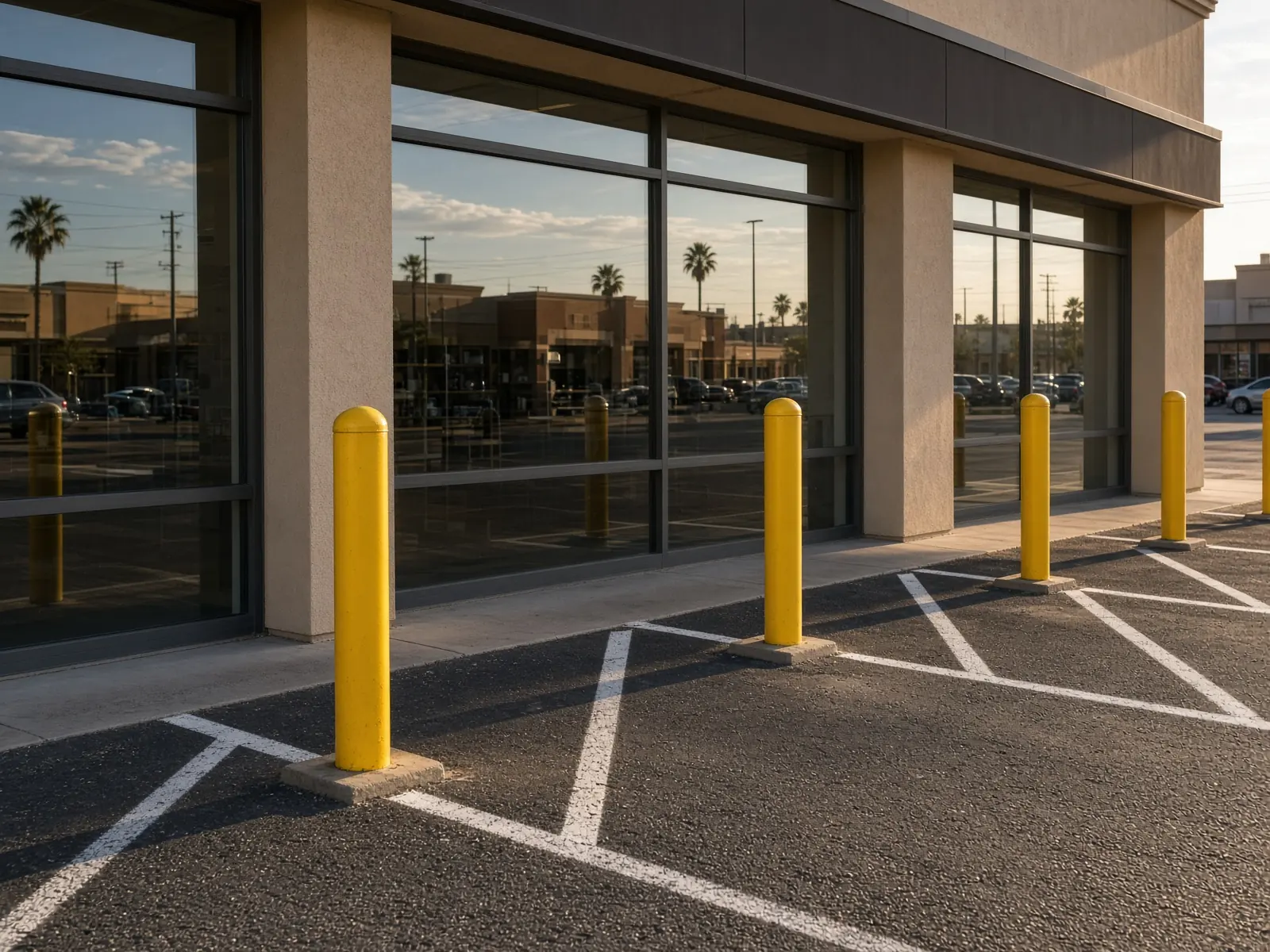
In Phoenix, a red curb means you may not park there at any time. A yellow curb is a freight loading zone during the hours on the signs. A green curb is a short time limit — under thirty minutes, and never longer than the sign. That is the entire color list in Phoenix City Code 36-27.
White and blue are not in that section. Blue accessible parking is a different statute (Phoenix City Code 36-149 and A.R.S. § 28-884), usually with a sign and a placard rule, not a curb-color rule. White is convention plus whatever sign is next to it. If there is no sign, do not invent a meaning.
Tempe, Scottsdale, Glendale, Chandler and Gilbert all use painted curbs as a traffic-control device. None of them publishes a five-color table the way Lake Havasu City does. In those cities the sign wins.
What Phoenix actually wrote
- Red
No parking at any time
Phoenix 36-27(a). Bus loading only if signed.
- Yellow
Freight loading, posted hours
Phoenix 36-27(b). Not passenger loading.
- Green
Time limit under 30 minutes
Phoenix 36-27(c) and 36-151.
- White
Not defined in Phoenix code
Read the sign. 36-27 is silent.
- Blue
Accessible parking — by designation
36-149 and A.R.S. § 28-884, not 36-27.
Red
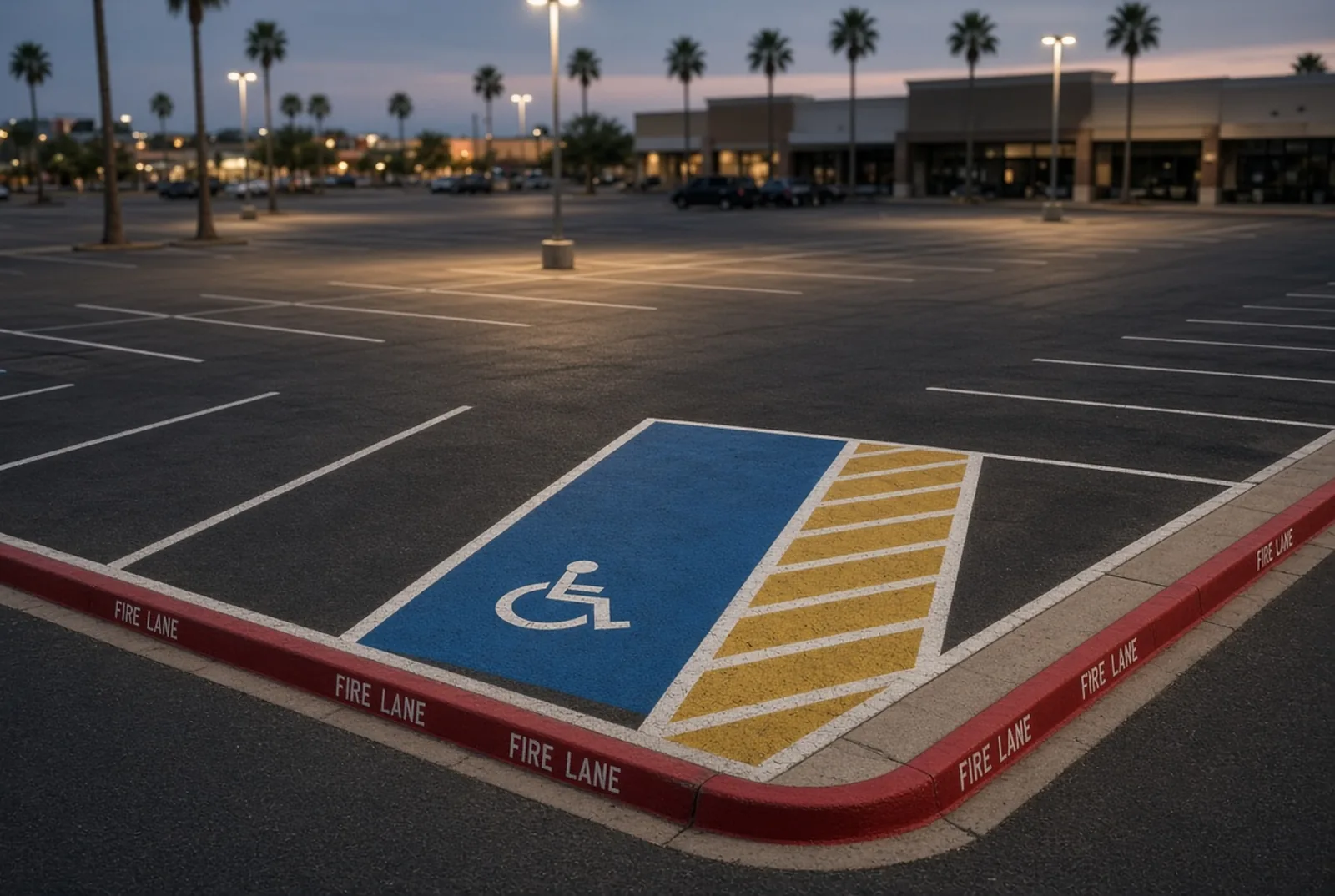
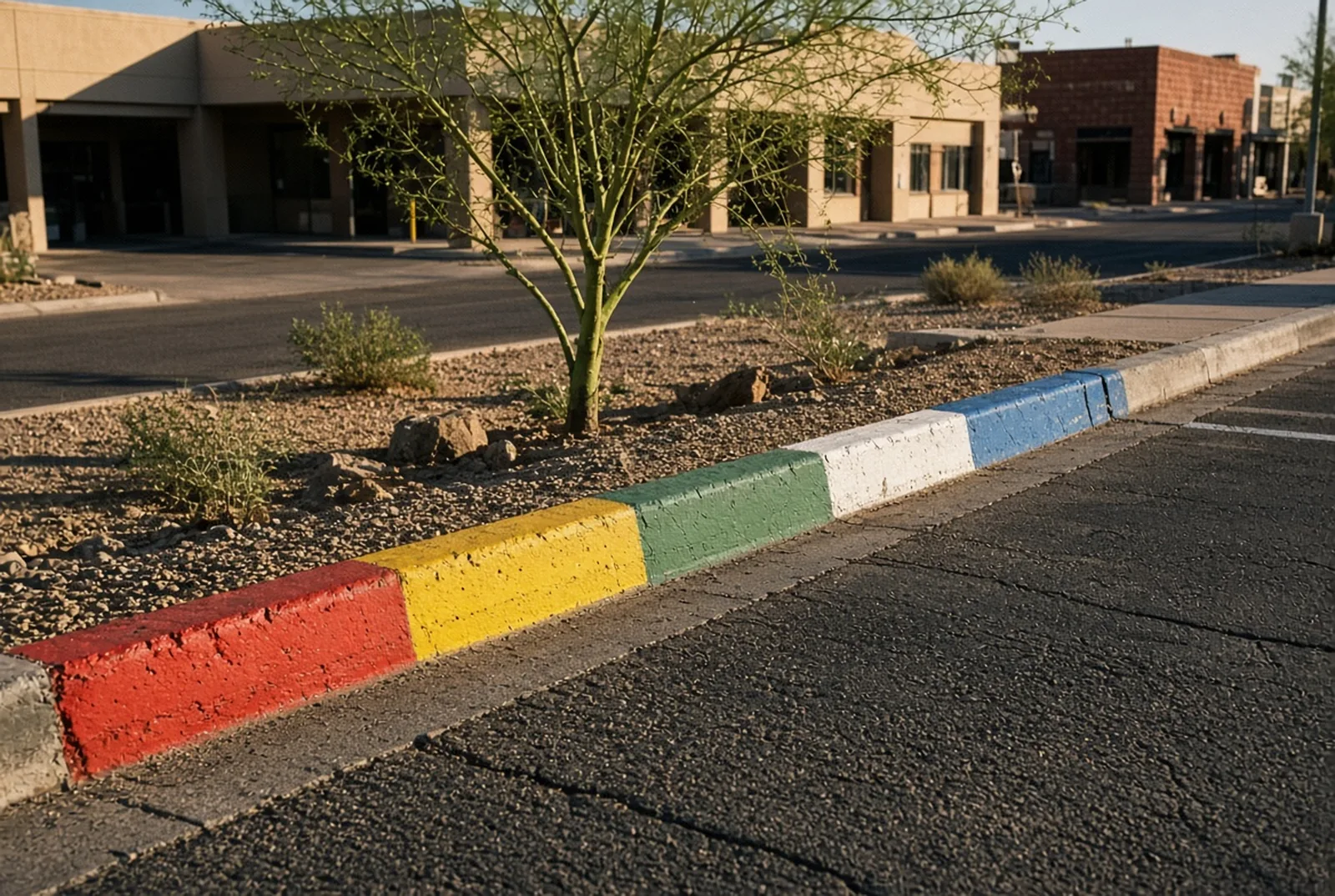
Phoenix City Code 36-27(a): parking is prohibited adjacent to a red curb at all times. The same curb may also be a bus loading zone, but only when signs say so. No sign, no bus exception.
Tempe says the same thing in different words: no stopping in a place marked as a no-parking zone by sign or red painted curb, except a signed bus stop. Scottsdale Code § 17-106(1) groups official signs and a red-painted curb as the same prohibition.
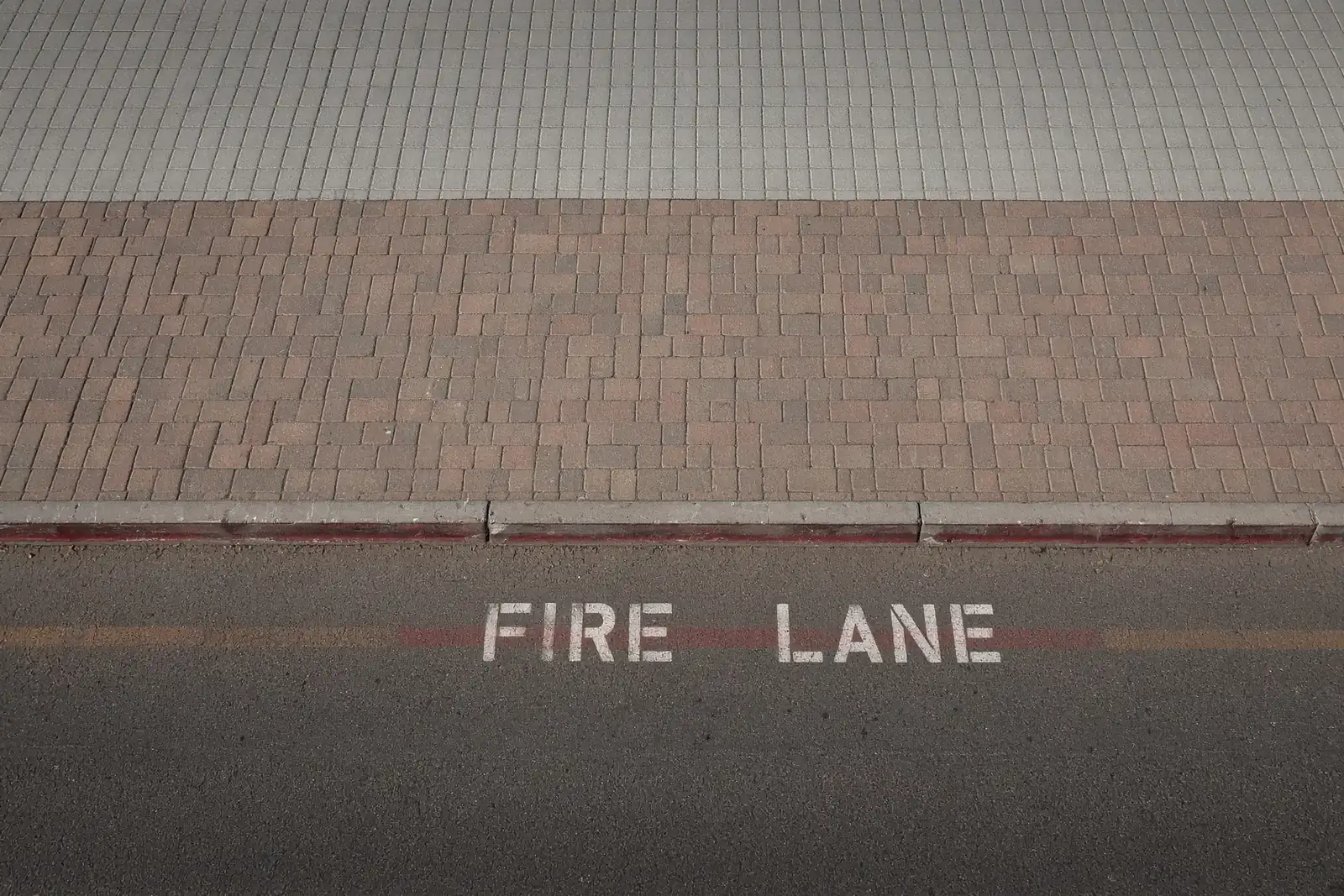
On a commercial lot, red is almost always a fire lane. That is a fire-code marking, not a traffic-code color. Lettering, interval and the sign package change by city — covered in the parking lot line-color guide.
Yellow
Phoenix 36-27(b) is narrower than the internet. Yellow is not “loading in general.” It is freight loading, during the hours on the signs at one or both ends of the zone. Outside those hours the restriction may lift. Read the sign.
Tempe’s curb loading zone (§ 19-122) is broader — materials or passengers — but it is still a loading zone, not a parking space. Materials: thirty minutes maximum. A vehicle with accessible plates or a valid placard may use the zone for up to fifteen minutes to load people.
Glendale splits the idea: passenger curb loading is three minutes (five with disabled insignia); freight loading follows the signs. If you are standing at a yellow curb in Glendale with no sign, you are guessing.
Green
Phoenix 36-27(c) reserves green for a time limit under thirty minutes. Phoenix 36-151 then caps it: you may not stay longer than the sign, and in no case longer than thirty minutes. That is the whole rule.
Green is uncommon on private lots in the Valley. When you see it, look for the minutes painted on the curb or posted on a plate. Do not assume “green means fifteen minutes.” Phoenix left the number to the sign, with a thirty-minute ceiling.
White
This is the term with the search volume, and it is the term Phoenix did not define.
Driver’s-ed blogs treat white as short-term passenger loading. That is a California-style convention. It is not Phoenix City Code. It is not in the Tempe, Scottsdale, Glendale, Chandler or Gilbert traffic chapters reviewed for this page.
What you should do at a white curb in the Valley: read the sign. If the sign says passenger loading, load passengers and leave. If there is no sign, treat it as unmarked and do not assume you have a legal loading window.
Blue
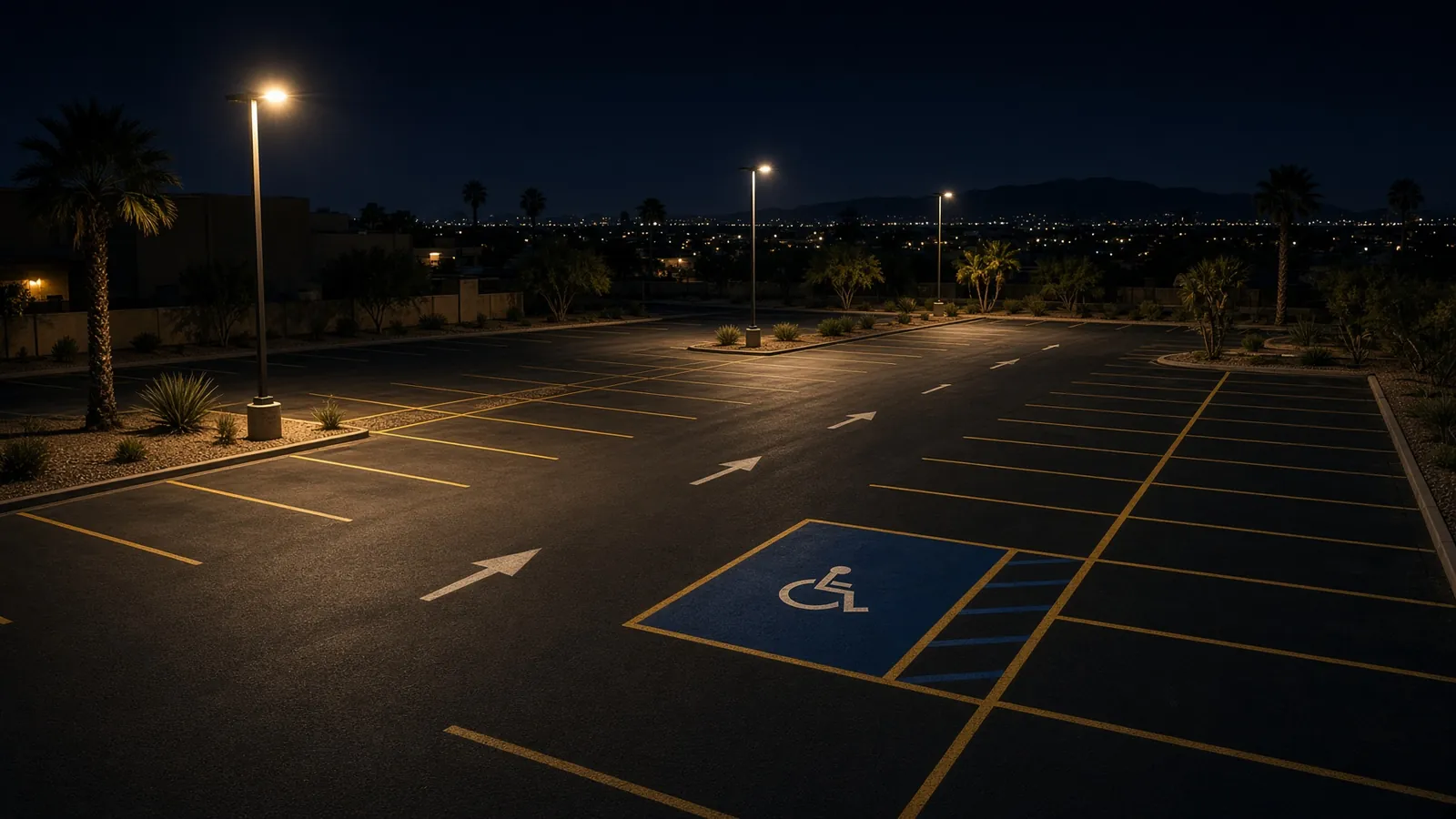
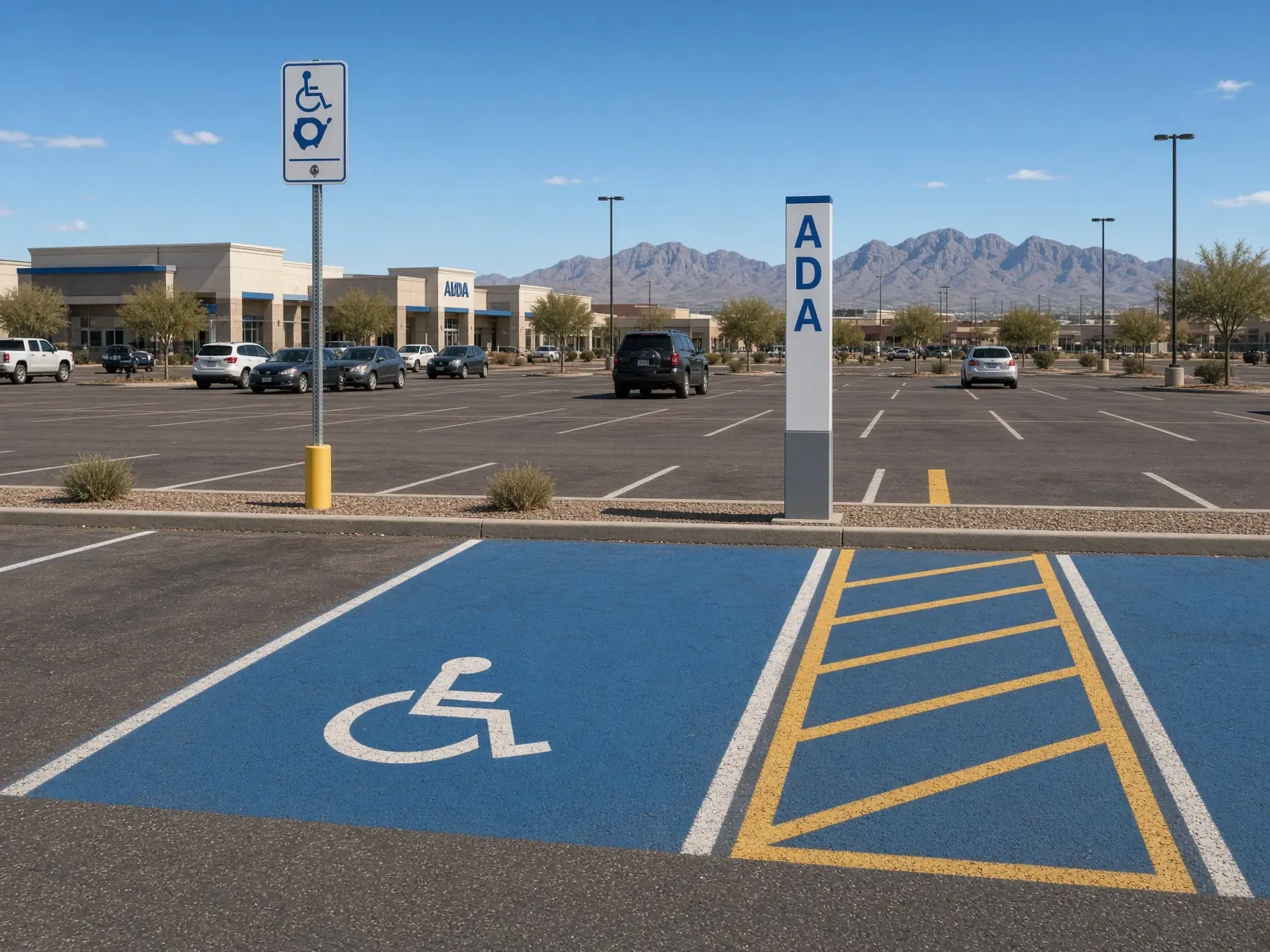
Blue means accessible parking only where the space is designated that way — typically a sign with the international symbol of access, and often a painted symbol on the pavement. Phoenix handles on-street accessible spaces under 36-149 and state law A.R.S. § 28-884, not under the curb-color section.
A blue-painted curb without a sign is sloppy marking, not a free pass and not a legal stall. Parking in a designated accessible space without a valid placard or plates is a state-law offense. Full stall dimensions live in the ADA parking requirements guide.
What your city actually says
Six cities, six levels of specificity. The empty cells are the point. Lake Havasu City is the Arizona example that does publish a full red / yellow / green / blue table. That is one municipality. It is not the Phoenix metro.
| City | Red | Yellow | Green | White | Blue |
|---|---|---|---|---|---|
| Phoenix | No parking at all times. Bus loading only if signed. 36-27(a). | Freight loading during posted hours. 36-27(b). | Time limit under 30 min. 36-27(c), 36-151. | Not defined in 36-27. | Not in 36-27. Accessible spaces: 36-149 + A.R.S. § 28-884. |
| Tempe | No parking by sign or red curb, except signed bus stop. | Curb loading zone: materials ≤30 min; accessible load ≤15 min. 19-122. | Not defined as a color. | Not defined as a color. | Stall and sign, not a curb table. |
| Scottsdale | No stop, stand or park. § 17-106(1). | Loading zones exist by definition; no color assigned in Ch. 17. | Not defined. | Not defined. | Not defined as a curb color. |
| Glendale | Used as a no-parking control; no color table. | Freight vs. passenger set by signs. Passenger load: 3 min (5 with insignia). | Not defined. | Not defined. | Not defined as a curb color. |
| Chandler | Red curb = no parking. Painting a public curb needs a permit. | No color table. | No color table. | No color table. | No color table. |
| Gilbert | Fire lanes designated by the traffic engineer. § 62-67. | No color table. | No color table. | No color table. | Stall plus a sign 3–6 ft high with the wheelchair symbol. |
Curb paint on a street is not paint on a lot
On-street colors are traffic-control devices. The city traffic engineer designates them. Painting a public curb yourself is unlawful in Tempe (§ 19-121) and an encroachment in Chandler (Chapter 46) unless you have a permit.
On a private commercial lot the fire marshal and the ADA standard do most of the talking. Red becomes a fire-lane spec. Blue becomes an accessible stall spec. White and yellow become layout conventions. That is a different page, written for the person who pays to repaint: parking lot line colors.
Common questions
What does a white curb mean in Arizona?
Phoenix City Code 36-27 does not define white. Neither do the Tempe, Scottsdale, Glendale, Chandler or Gilbert traffic chapters reviewed here. Read the sign. The “short-term parking” line on national blogs is convention, mostly from other states, not Valley law.
What does a red curb mean?
No parking. In Phoenix, at all times, with a bus exception only when signs say so. On a commercial lot, red is usually a fire lane and the fire code adds lettering and signs on top of the paint.
Can I sit at a yellow curb?
In Phoenix, only for freight loading during posted hours. In Tempe, only for expeditious loading, with a thirty-minute cap on materials. In Glendale, passenger loading is three minutes. You do not get to leave the car and go inside for lunch.
What does a green curb mean in Phoenix?
A time limit under thirty minutes. Stay no longer than the sign, and never more than thirty minutes (36-27(c) and 36-151).
Does a blue curb always mean handicapped parking?
Blue is reserved for accessible parking, but the legal stall is the designated space — sign, symbol, aisle — not the paint color alone. Unauthorized parking there is a state-law problem.
Who decides curb colors on my street?
The city traffic engineer. Not the business owner, not a striping contractor, and not a homeowner who bought a quart of red.